
Policymakers have a foundational role to play in financing and implementing future TB vaccines. For National Immunization Technical Advisory Groups (NITAGs) and Ministries of Health, a future TB vaccine will be necessarily distinct from previous immunization campaigns given the adolescent and adult target population and opportunities to integrate vaccines into existing TB care systems alongside other biomedical TB prevention tools.
Filter
Over one hundred years after the introduction of BCG, the TB Vaccine Pipeline holds the potential for a new TB vaccine. This crash course covers all the major developments and considerations in the pipeline as we prepare for results from landmark Phase III studies.
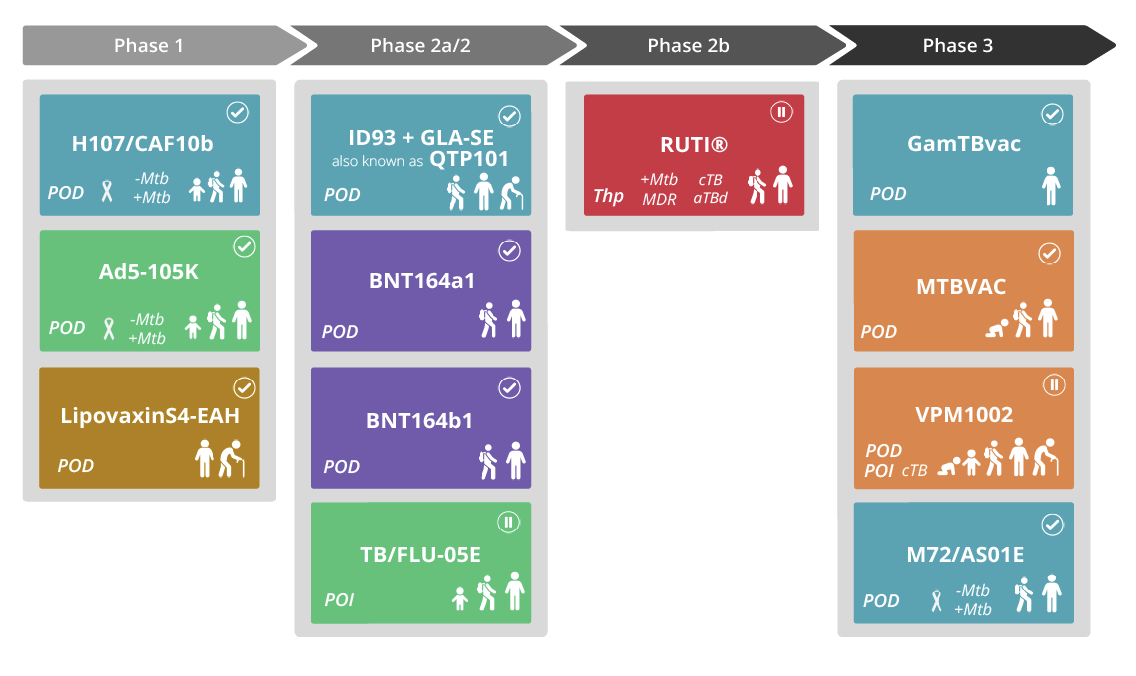
The Working Group on New TB Vaccines TB Vaccine Pipeline covers TB vaccine candidates from preclinical proof-of-concept models to post-marketing studies. Candidates for each category can be viewed by latest stage of development, or on a sortable page that filters candidates by certain categories. Follow the pipeline as candidates move along the development pathway towards the goal of entering Phase III trials.
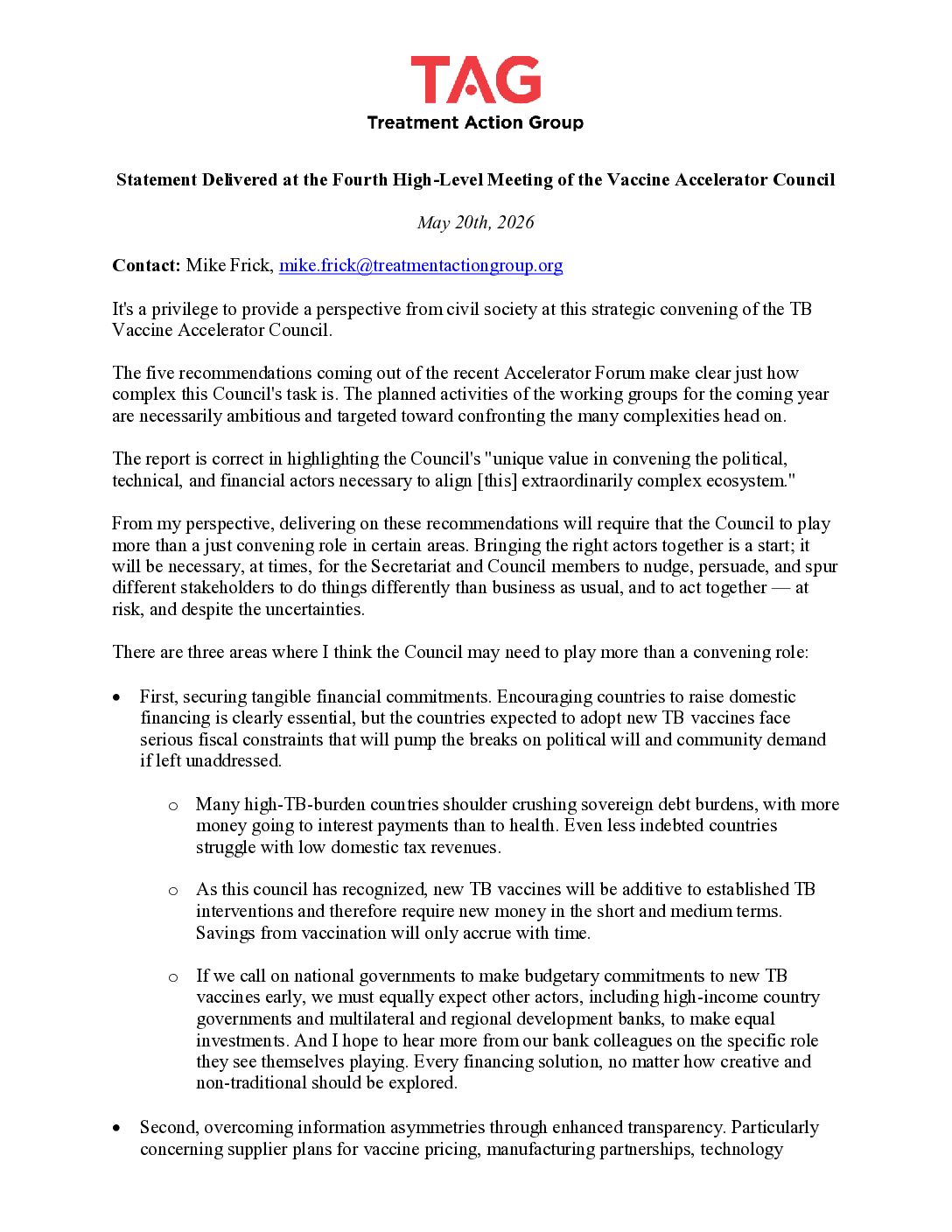
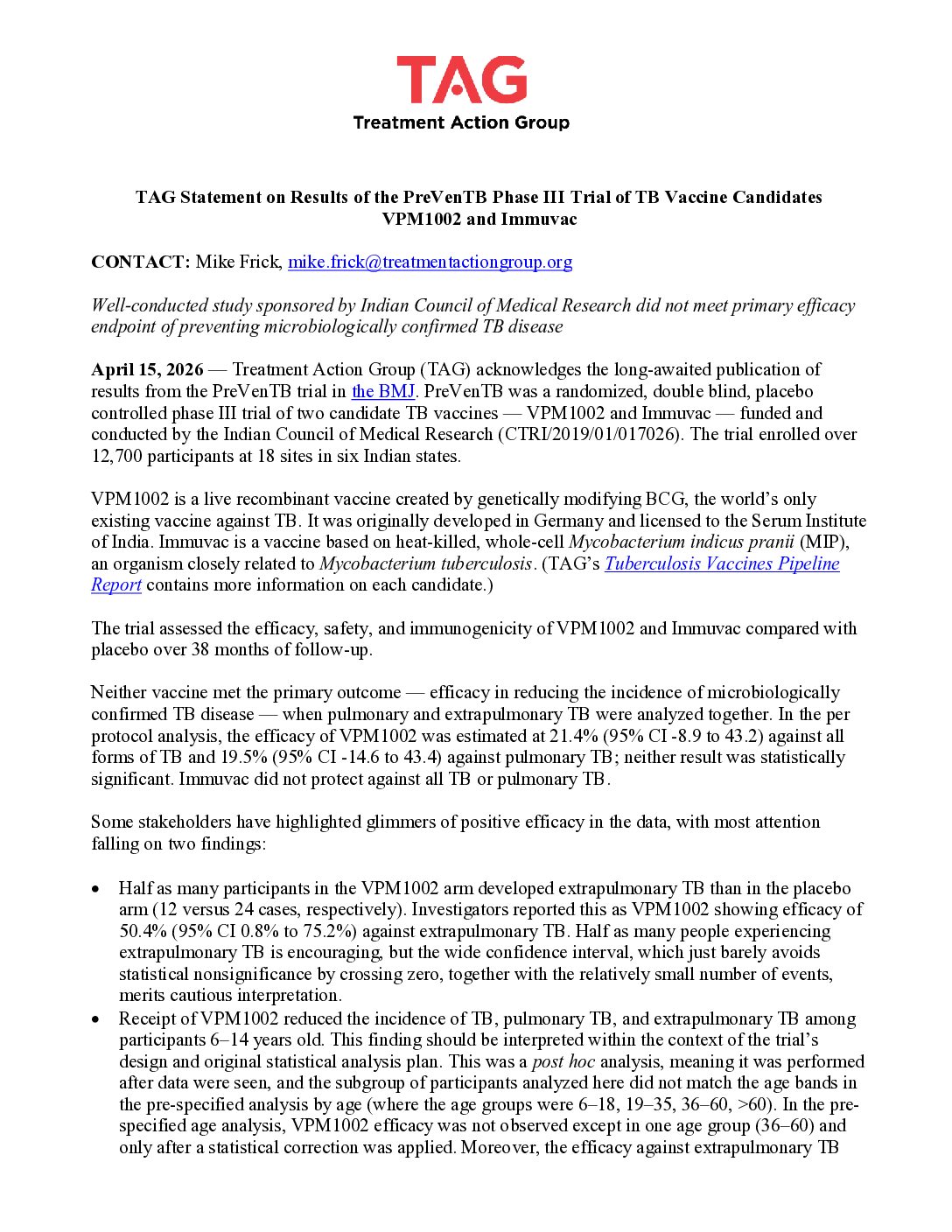
Statement Delivered at the Fourth High-Level Meeting of the Vaccine Accelerator Council, May 2026
The TB Vaccine Accelerator Council has a key role to play in developing infrastructures of trust between governmetns and theose who stand to benefit the most from new TB vaccines. This statement lays out critical actions the Council and governments must take to build the trust before vaccines are introduced.
Communities and civil society organizations are poised to play an indispensable role in ensuring the success of new TB vaccines by building the “infrastructures of trust” that are foundational to vaccine acceptance, demand, and equitable access.
What Could Go Right: Vital Partnerships with Communities and Civil Society for New Tuberculosis Vaccines explores the indispensable role of communities and civil society in preparing the way for new TB vaccines and ensuring their success once they become available. The report brings together three unique studies that assess the readiness of community and civil society to contribute to TB vaccine policymaking and implementation at national, regional, and global levels, and the investments funders should make to strengthen community capacity and engagement.
- No Vaccines Without Us: A Global Landscape Analysis of Civil Society Engagement in TB Vaccine Preparedness is based on a global survey of 125 civil society organizations active in the TB response in 42 countries and documents the readiness of CSOs to participate in new TB vaccine policymaking, demand creation, and implementation.
- Seven Country Policy Portraits, written by local activists, illustrate how vaccine policy is made in seven countries — Bangladesh, Kazakhstan, Kenya, Malawi, Mongolia, South Africa, and Vietnam — and propose reforms to strengthen the representation of community partners in national immunization decision making.
- TB Vaccine Access in “4D”: A Roadmap Charting Civil Society Actions for Equitable Access outlines a series of actions civil society can take with the support of other key stakeholders to assure access to new TB vaccines along four dimensions: development, delivery, demand, and data.
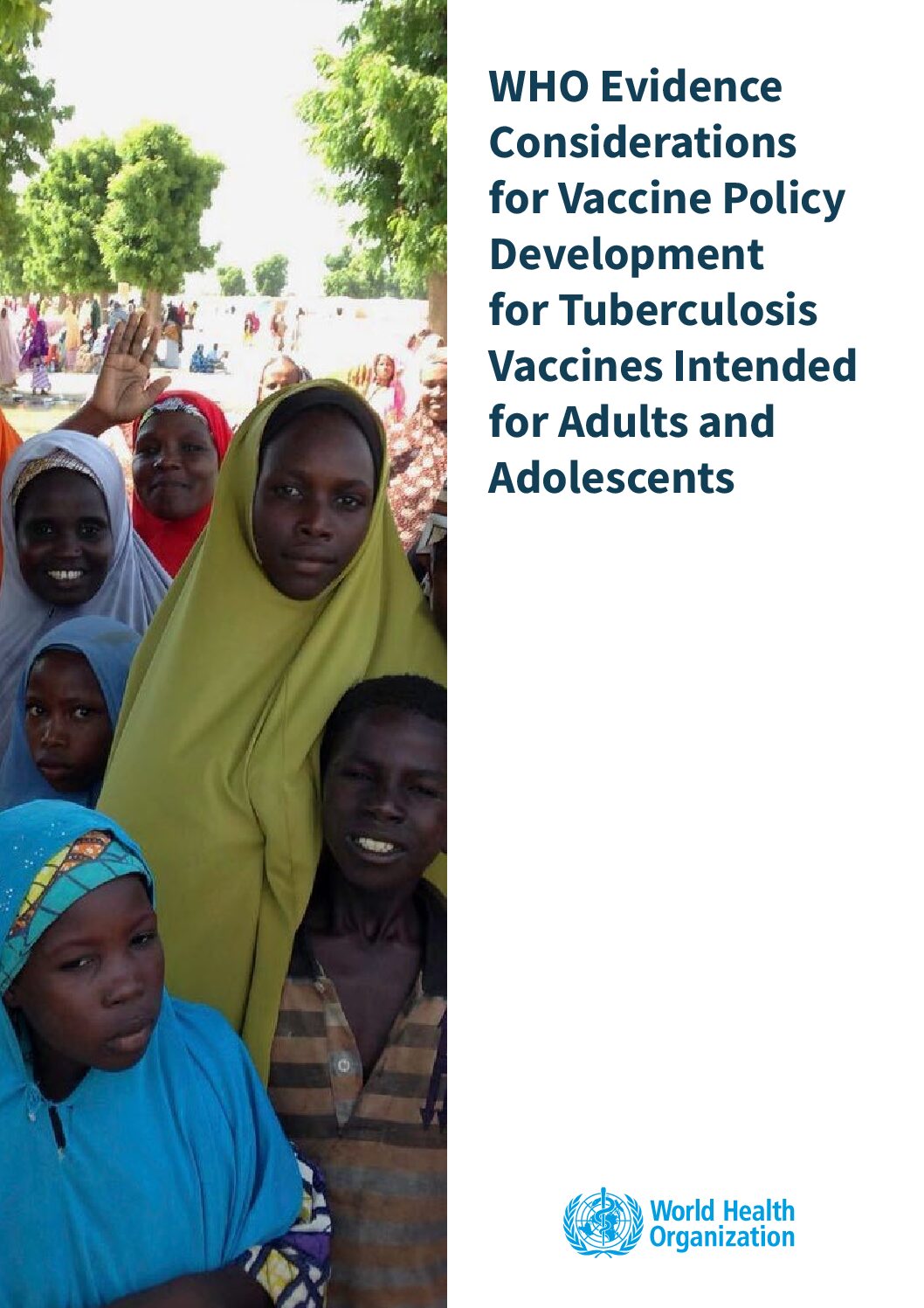
The World Health Organization’s Evidence Considerations for Vaccine Policy Development (ECVP) focuses on TB vaccines intended for adults and adolescents and is designed to support the product development, regulatory approval, introduction, access and widespread use in LMICs of new TB vaccines.The ECVP does not pre-empt policy or implementation decision-making but aims to reduce the risk of evidence gaps and consequent delays between vaccine regulatory approval and vaccine impact.
The 19th iteration of Treatment Action Group (TAG)’s Tuberculosis Research and Development Funding Report analyzes the state of play for dedicated TB R&D funding following the United Nations High Level Meeting on TB in September 2023.
Significant acceleration of investment — bolstered by broader democratic support from more diversified sources of funding — is necessary to develop and scale up the tools necessary to end TB as a public health crisis.
Treatment Action Group’s 2024 Tuberculosis Vaccines Pipeline Report surveys major developments in the clinical development of new TB vaccines at this moment of scientific promise and political peril. The pipeline contains 17 candidates and covers vaccines that currently in Phase I, II, or III trials, For each candidate, TAG summarizes the known ongoing, recently completed, or planned clinical trials. Narrative descriptions throughout discuss the notable updates of key candidates that generated the most news over the past year either due to clinical trial results, delays, or the beginning of major new studies.
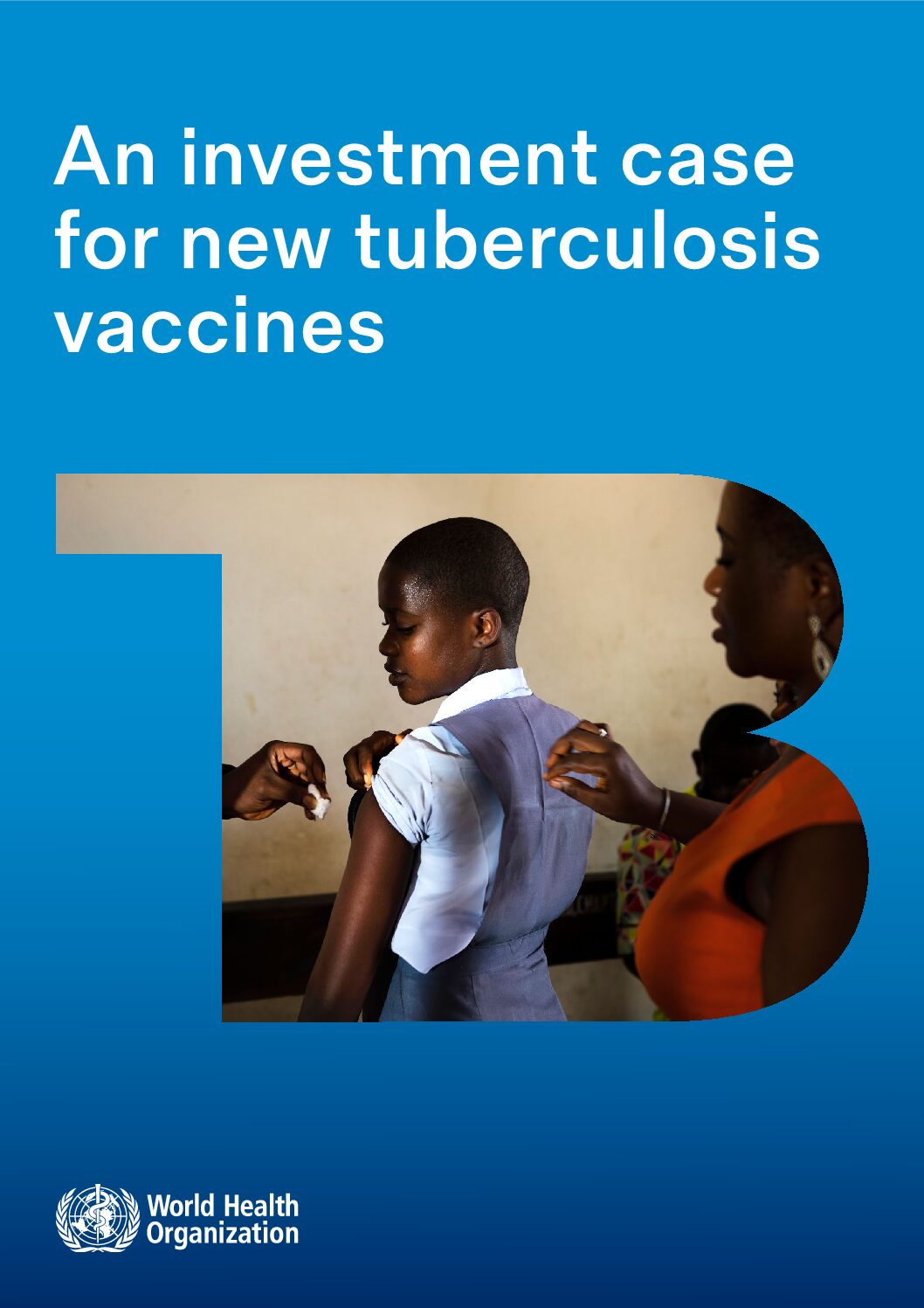
Early this decade, the WHO commissioned a study into the rationale for investing in new TB vaccines from the country perspective. This case study provides early evidence for policy and decision-makers to assess the grounds for investing in TB vaccines, vaccine research, financing, manufacturing, introduction, and procurement. Early and regular investments from key stakeholders supports the acceleration of the development of new, effective TB vaccines and their potential introduction.
The World Health Organization‘s Catalyzing solutions for equitable global access and sustainable financing for novel tuberculosis vaccines for adults and adolescents report assesses country readiness, demand and supply projections, product development pathways and the global financing landscape to understand potential uncertainties and bottlenecks affecting early introduction, including demand fragmentation, manufacturing capacity constraints, regulatory dependencies and financing gaps in potential TB vaccine introduction over the 2030–2040 period. The report also offers a set of solutions and mechanisms designed to proactively address these foreseen challenges.
From Forest to Factory: Tracing the Supply Chains for Two Modern Adjuvants of Global Health Importance — QS-21 and MPL provides a first-of-its-kind analysis of the global supply chains of two key adjuvants used in several of the world’s most important vaccines. The report paints a detailed picture of QS-21 supply drawing on information from newly public data on QS-21. The report provides recommendations on how supply chains for adjuvants can be strengthened through greater transparency, competition, and sustainability with the goal of maximizing the global health impact of adjuvant development for equitable access to vaccines.
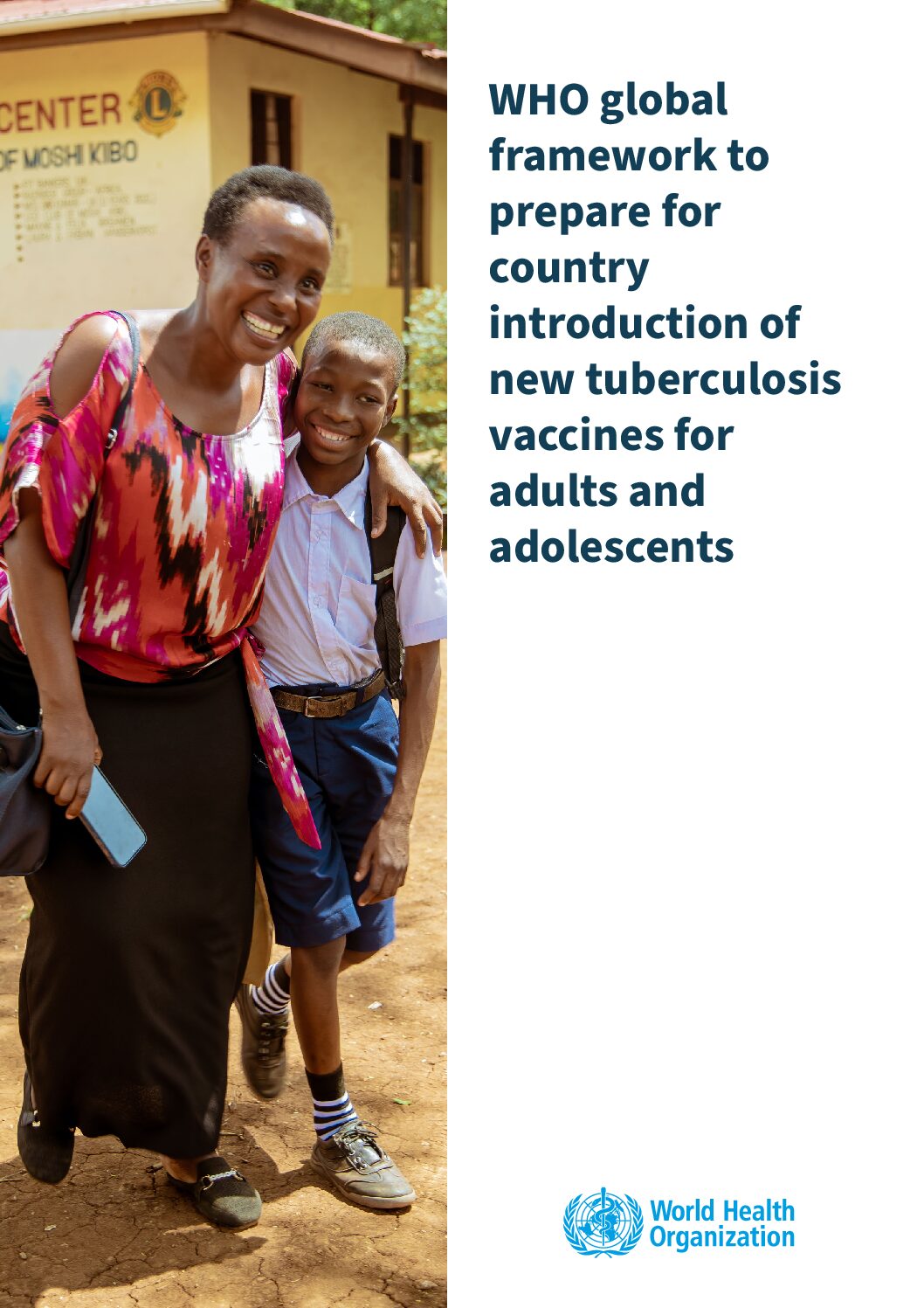
The WHO framework to prepare for Country Introduction of New TB Vaccines for Adults and Adolescents was designed to support the planning, investments, and preparation for the rapid introduction and scale-up of TB vaccines for adults and adolescents so that they are available such that new vaccines are manufactured with sufficient, sustainable and timely supply; accessible, with equitable delivery aimed at all who could benefit and accepted, so that end-users, healthcare workers, and policy makers´ requirements are met.
As now-late stage TB vaccine candidates were quietly advancing through the Pipeline, the World Health Organization brought together a group of scientists, developers, funders, civil society, and community representatives to discuss the ideal characteristics of a future TB vaccine. This document presents the preferred characteristics for new TB vaccines, informed by the high need for additional vaccines to meaningfully shift the battle to end TB.
The overarching priorities underscore the need for a vaccine to prevent pulmonary TB and reduce transmission of TB in adults and adolescents alongside a new pediatric vaccine that improves on the safety and efficacy of BCG.