
Developed in honor of World TB Day 2026, this zine demystifies vaccines, TB, and leading TB vaccine candidates. Tapping into optimism for a future TB vaccine and the importance of community care through vaccination, this zine grounds the conversation in what an effective new TB vaccine would look like for communities, how vaccines integrate into the larger TB prevention strategy, and how a new TB vaccine for adults and adolescents could be a powerful tool in the quest to end TB.
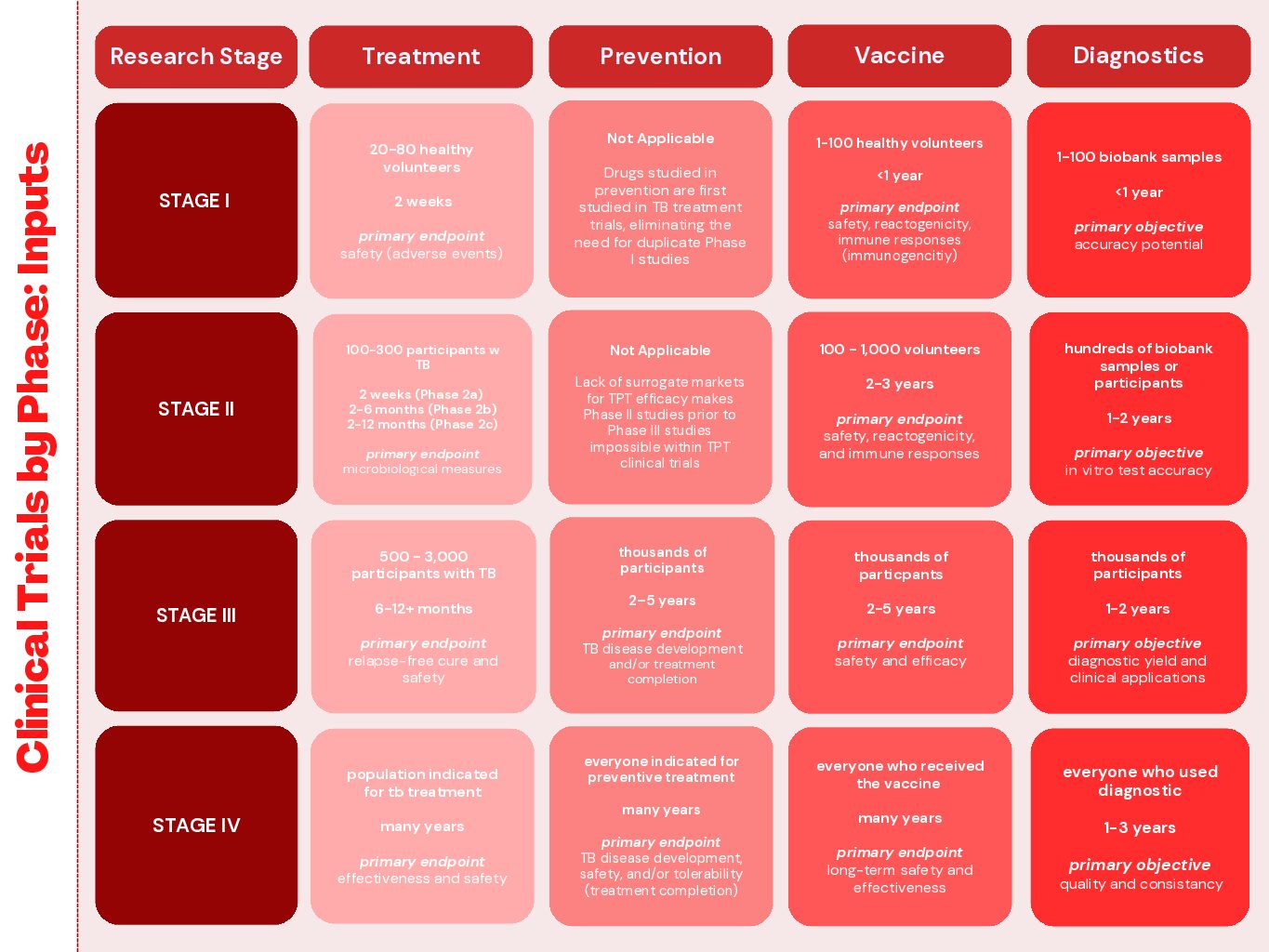
Vaccine clinical trials have different inputs and outputs at each phase of the clinical pathway. This guide explores what researchers are looking for at each trial phase and how big each trial is. In this cheat sheet, vaccine trials are compared to the diagnostic and treatment trial requirements to highlight how clinical trials and timelines differ across innovations.
The research process from discovery to clinical trials to implementation can be opaque making interpreting results from studies difficult for even a seasoned researcher or activist. This lecture series walks through the fundamentals of research, key terms, and common measures found in clinical trial results; preparing activists and advocates to understand TB vaccine trial results as they emerge over the next several years.
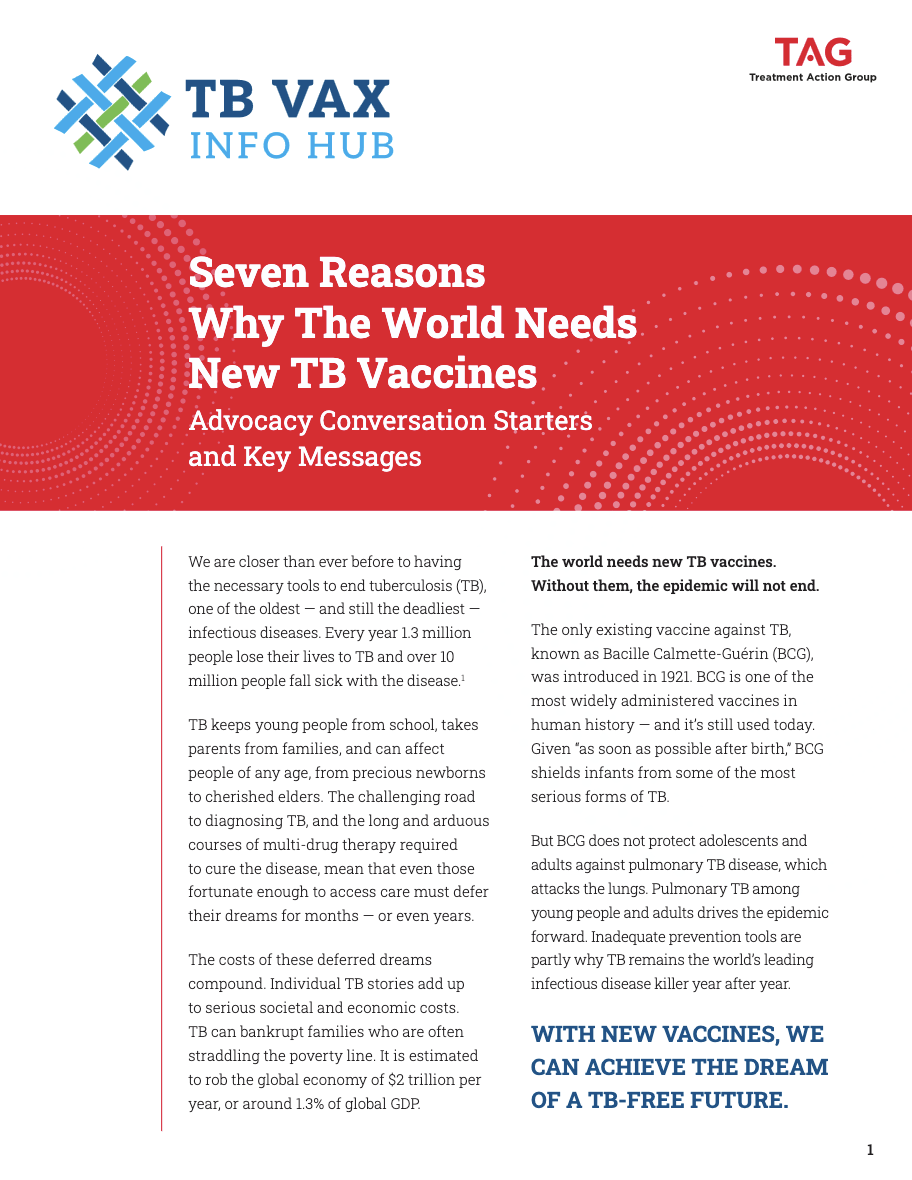
Seven Reasons Why The World Needs New TB Vaccines Advocacy Conversation Starters and Key Messages presents seven key messages that can serve as “conversation starters” when advocating for new TB vaccines across a wide variety of stakeholders. The seven messages together provides a unified backbone for all TB vaccine messaging grounded in evidence-based narratives that resonate with decision-makers that can be adapted for local contexts based on the key interests and needs of unique communities.
TB has plagued humanity for nearly as long as humanity existed. This lecture offers a broad overview of how TB interacts with the human body and society. Covering everything from the TB bacterium itself, to how the immune system responds to TB, how infection becomes TB disease, and even how TB intersects with larger health and societal disparities, this module dives into why TB remains so persistent over the centuries despite our best efforts to end TB.
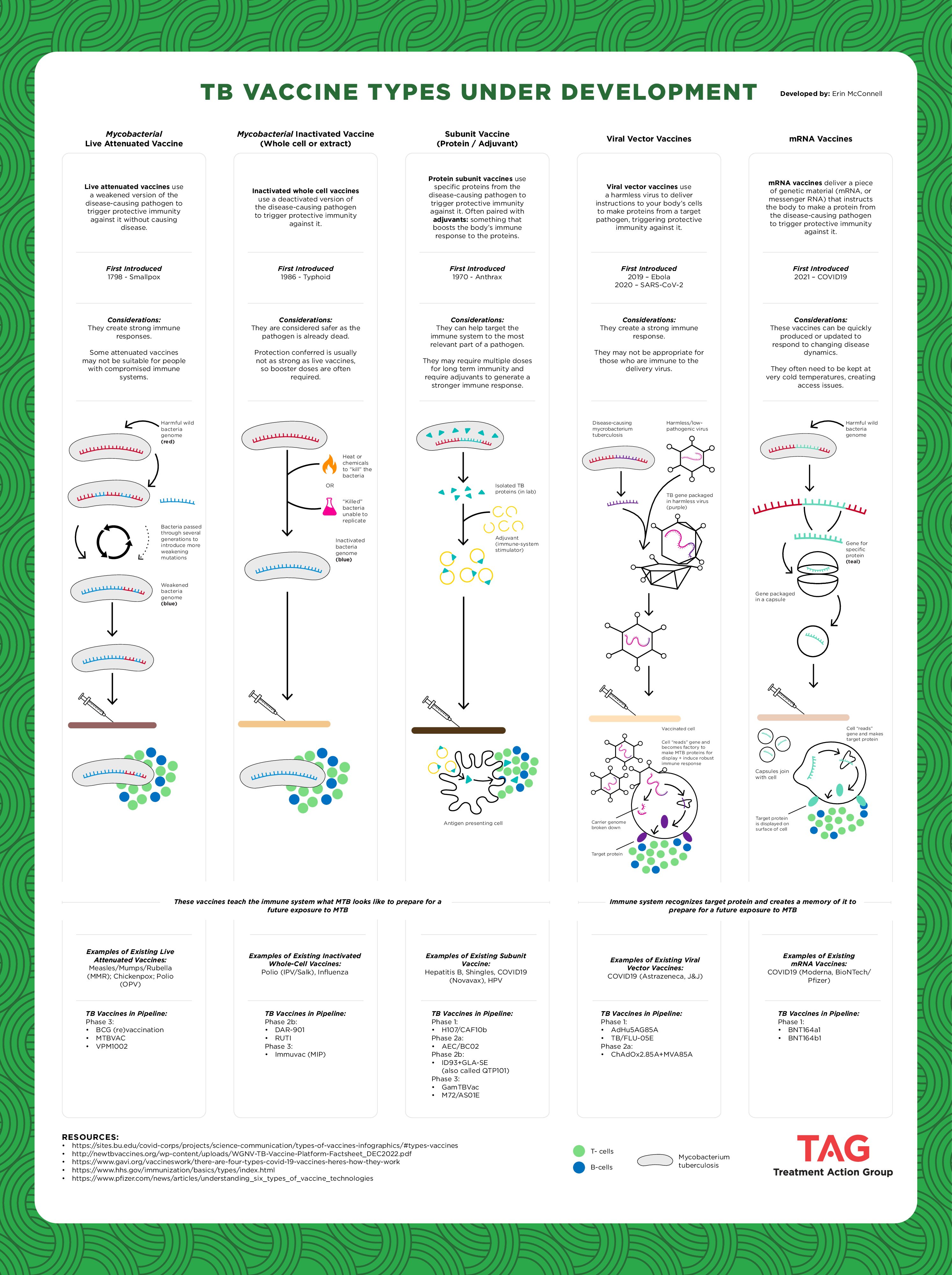
This cheat sheet designed specifically for community activists gives readers a high level overview of the basic science behind different common vaccine types (i.e., mRNA vaccines, viral vector vaccines). The vaccine types included all represent types of vaccines under development for the TB and the cheat sheet provides examples of well known vaccines for other diseases that use a similar design model. The cheats sheet notes key considerations that influence the efficacy, safety, acceptance, and accessibility of vaccines.
Over one hundred years after the introduction of BCG, the TB Vaccine Pipeline holds the potential for a new TB vaccine. This crash course covers the history, immunology and science behind the development of TB vaccines, and covers the major developments that lead to the opening of recent phase III trials.
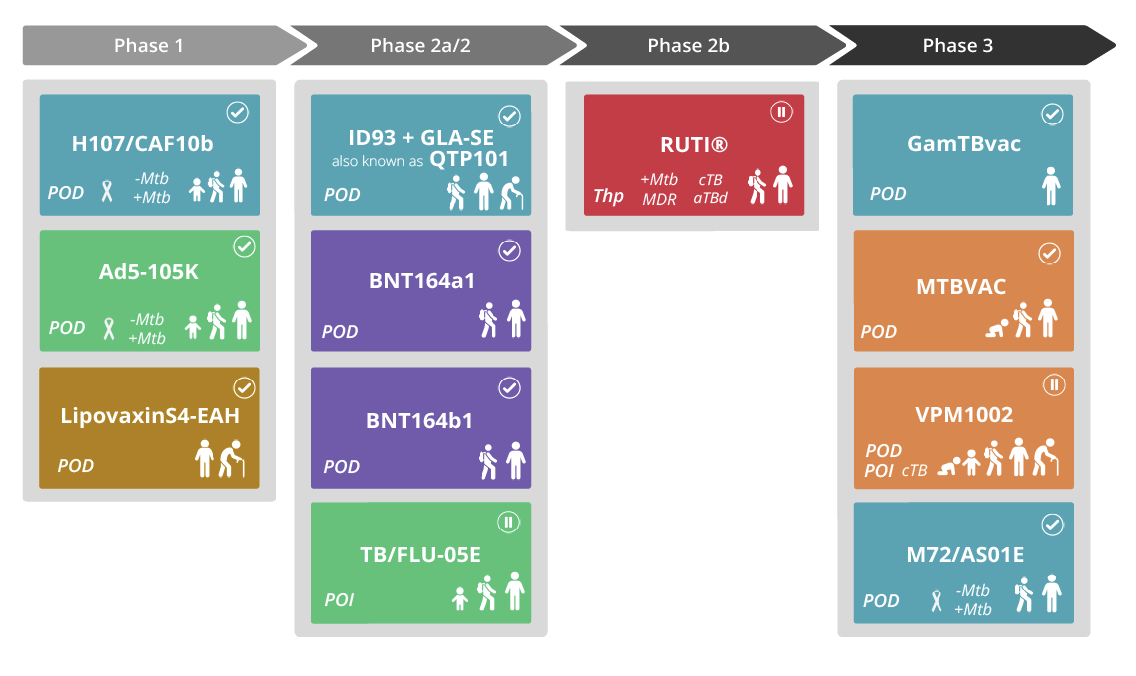
The Working Group on New TB Vaccines TB Vaccine Pipeline covers TB vaccine candidates from preclinical proof-of-concept models to post-marketing studies. Candidates for each category can be viewed by latest stage of development, or on a sortable page that filters candidates by certain categories. Follow the pipeline as candidates move along the development pathway towards the goal of entering Phase III trials.
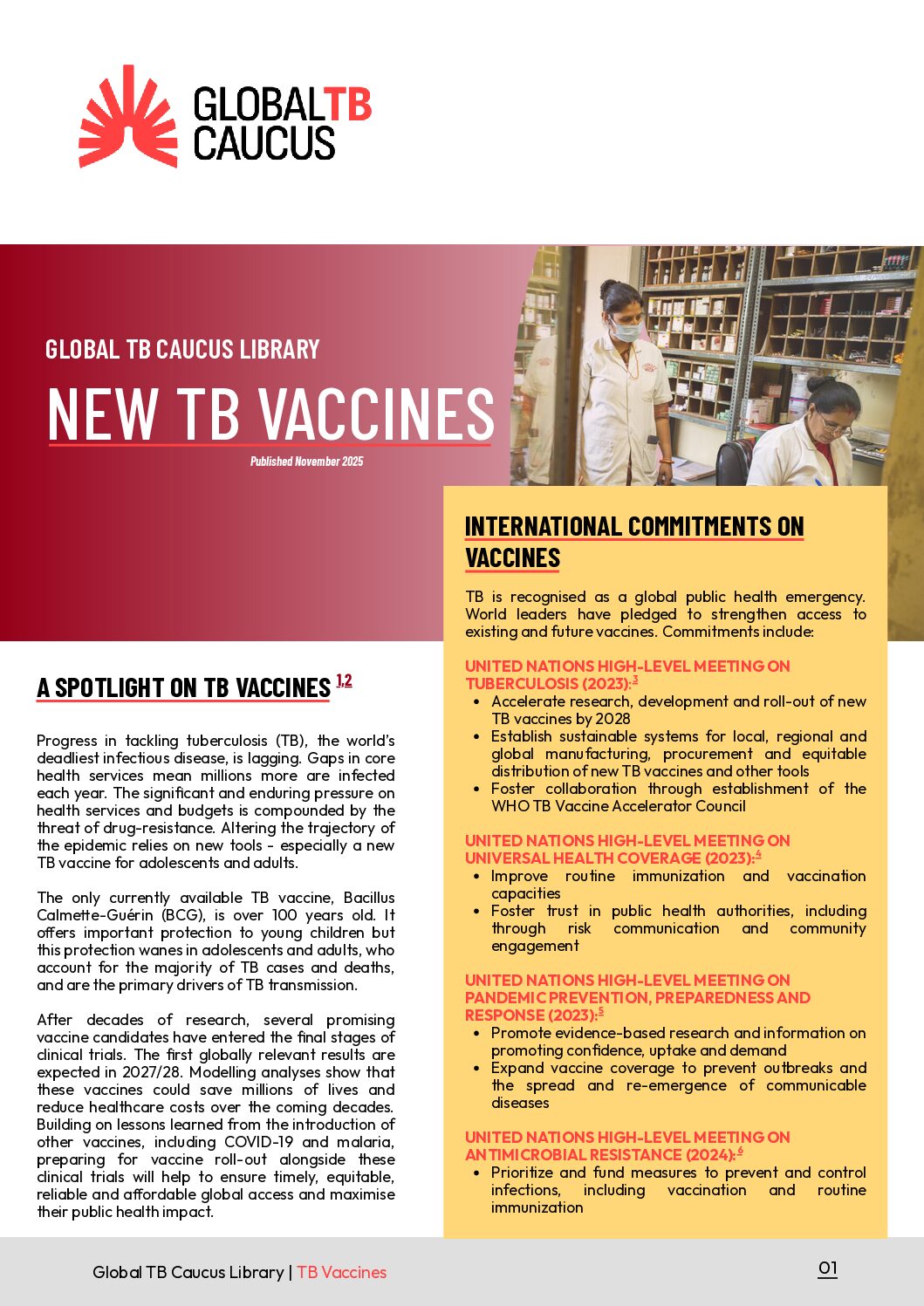
As several new vaccines progress to final trials and results anticipated near the end of this decade, early preparation for roll-out is foundational to ensuring access to successful vaccine candidates is equitable, affordable, and timely for communities who stand to benefit the most. In collaboration with an expert panel of scientists, policymakers and people with lived experience, the Global TB Caucus outlined what good vaccine preparedness looks like and how parliamentarians can drive early action.
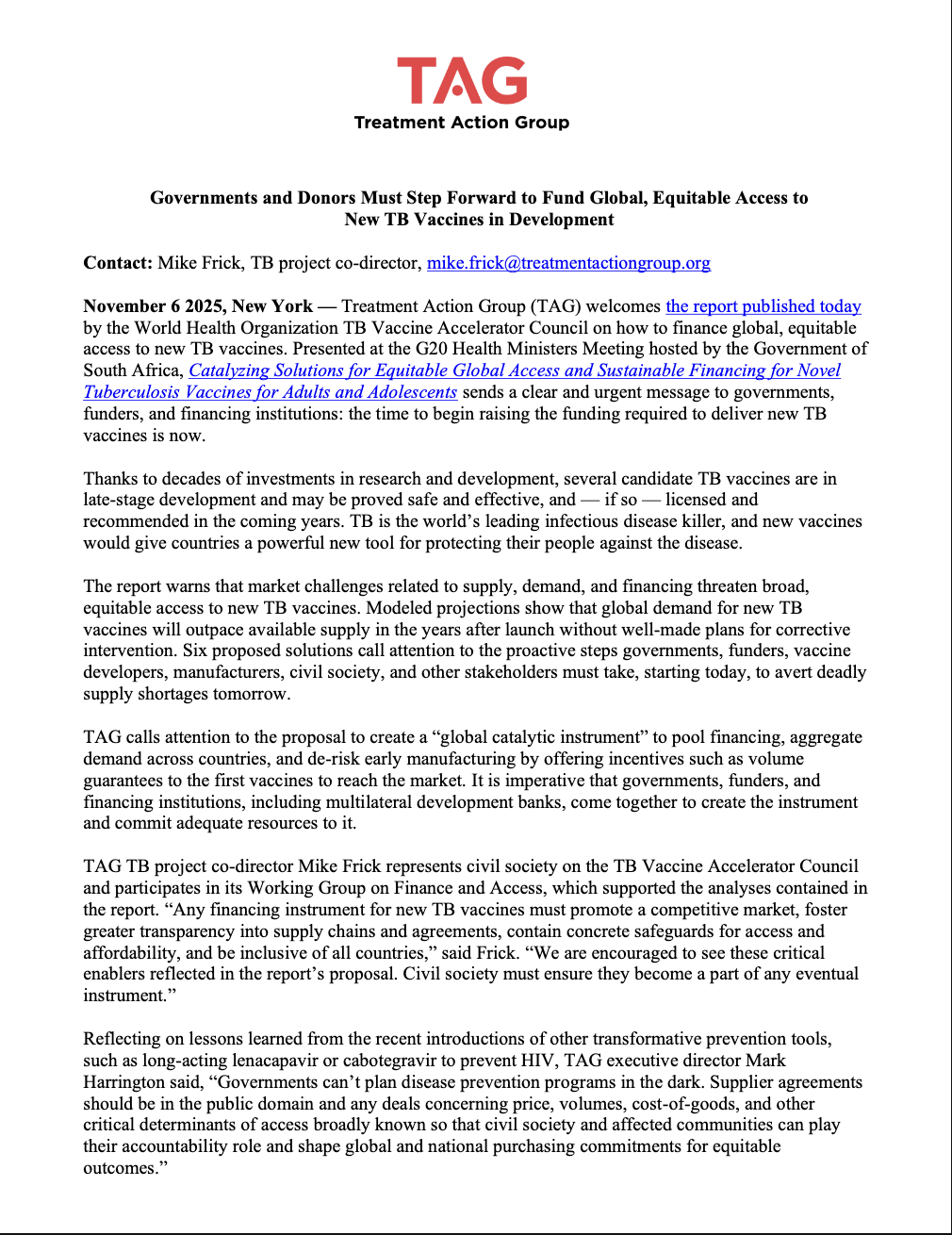
Governments and donors must be aware of market challenges related to supply, demand, and financing that will threaten equitable access to future TB vaccines. Without thoughtful planning and intervention, the global demand for TB vaccines will exceed supply in the years following launch. Governments, funders, developers, manufacturers, civil society, and other stakeholders must take, starting today, to avert deadly supply shortages tomorrow.
This statement reflects on the proposal to create a “global catalytic instrument” to support future TB vaccines and calls on all stakeholders to learn from the introduction of other tools like long-acting prevention tools for HIV and act early to ensure adequate financing and supply to realize the success of a future TB vaccine.
The TB Vaccine Accelerator Council has a key role to play in developing infrastructures of trust between governments and those who stand to benefit the most from new TB vaccines. This statement lays out critical actions the Council and governments must take early, well in advance of new TB vaccines entering the market, to build the trust before vaccines are introduced.
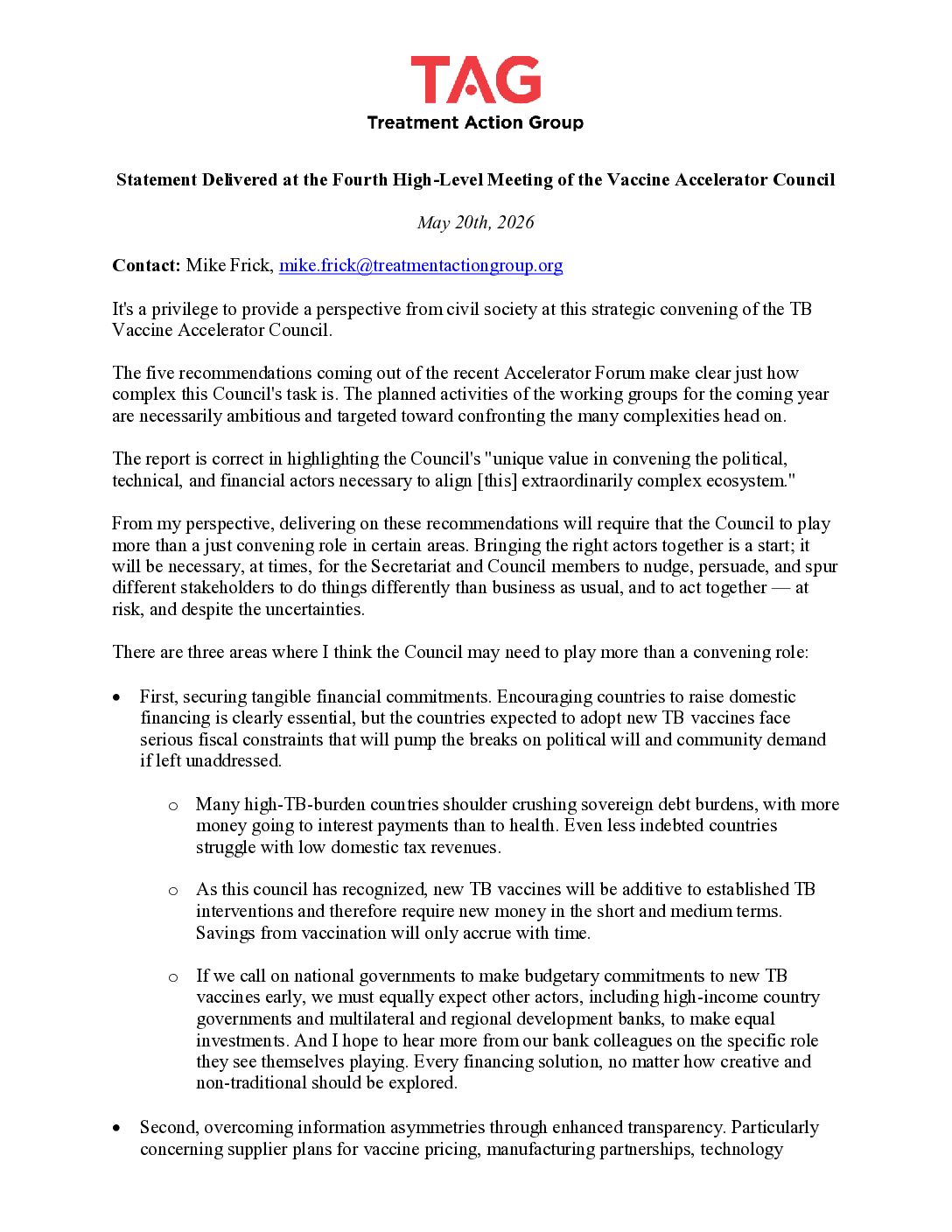
The long awaited results from the PreVenTB trial of two candidate TB vaccines — VPM1002 and Immuvac — were disappointing for the vaccine candidates themselves, but represented a victory for TB vaccine science and community engagement.
Civil society and communities celebrated that the PreVenTB trials represented the largest TB vaccine trial of this century and was funded by high-TB-burden country governments. Further the study was designed to reflect the specific epidemiology of the TB epidemic within India, enrolling populations that stand to benefit the most from a future TB vaccine but were left out of other trials.
What Could Go Right? Vital Partnerships with Communities and Civil Society for New Tuberculosis Vaccines, explores the foundational role that community and civil society groups can play in the successful introduction of a new TB vaccine and strategies for capacitating and empowering communities towards that goal. In bringing together three unique sub-studies, this first-of-its-kind report examines community and civil society’s readiness to engage in TB vaccine advocacy and policymaking at national, regional, and global levels, and underscores the transformative role communities can play in TB vaccine introduction, as well as the critical need for other stakeholders to help them realize that potential.
Communities and civil society organizations are poised to play an indispensable role in ensuring the success of new TB vaccines by building the “infrastructures of trust” that are foundational to vaccine acceptance, demand, and equitable access.
What Could Go Right: Vital Partnerships with Communities and Civil Society for New Tuberculosis Vaccines explores the indispensable role of communities and civil society in preparing the way for new TB vaccines and ensuring their success once they become available. The report brings together three unique studies that assess the readiness of community and civil society to contribute to TB vaccine policymaking and implementation at national, regional, and global levels, and the investments funders should make to strengthen community capacity and engagement.
- No Vaccines Without Us: A Global Landscape Analysis of Civil Society Engagement in TB Vaccine Preparedness is based on a global survey of 125 civil society organizations active in the TB response in 42 countries and documents the readiness of CSOs to participate in new TB vaccine policymaking, demand creation, and implementation.
- Seven Country Policy Portraits, written by local activists, illustrate how vaccine policy is made in seven countries — Bangladesh, Kazakhstan, Kenya, Malawi, Mongolia, South Africa, and Vietnam — and propose reforms to strengthen the representation of community partners in national immunization decision making.
- TB Vaccine Access in “4D”: A Roadmap Charting Civil Society Actions for Equitable Access outlines a series of actions civil society can take with the support of other key stakeholders to assure access to new TB vaccines along four dimensions: development, delivery, demand, and data.
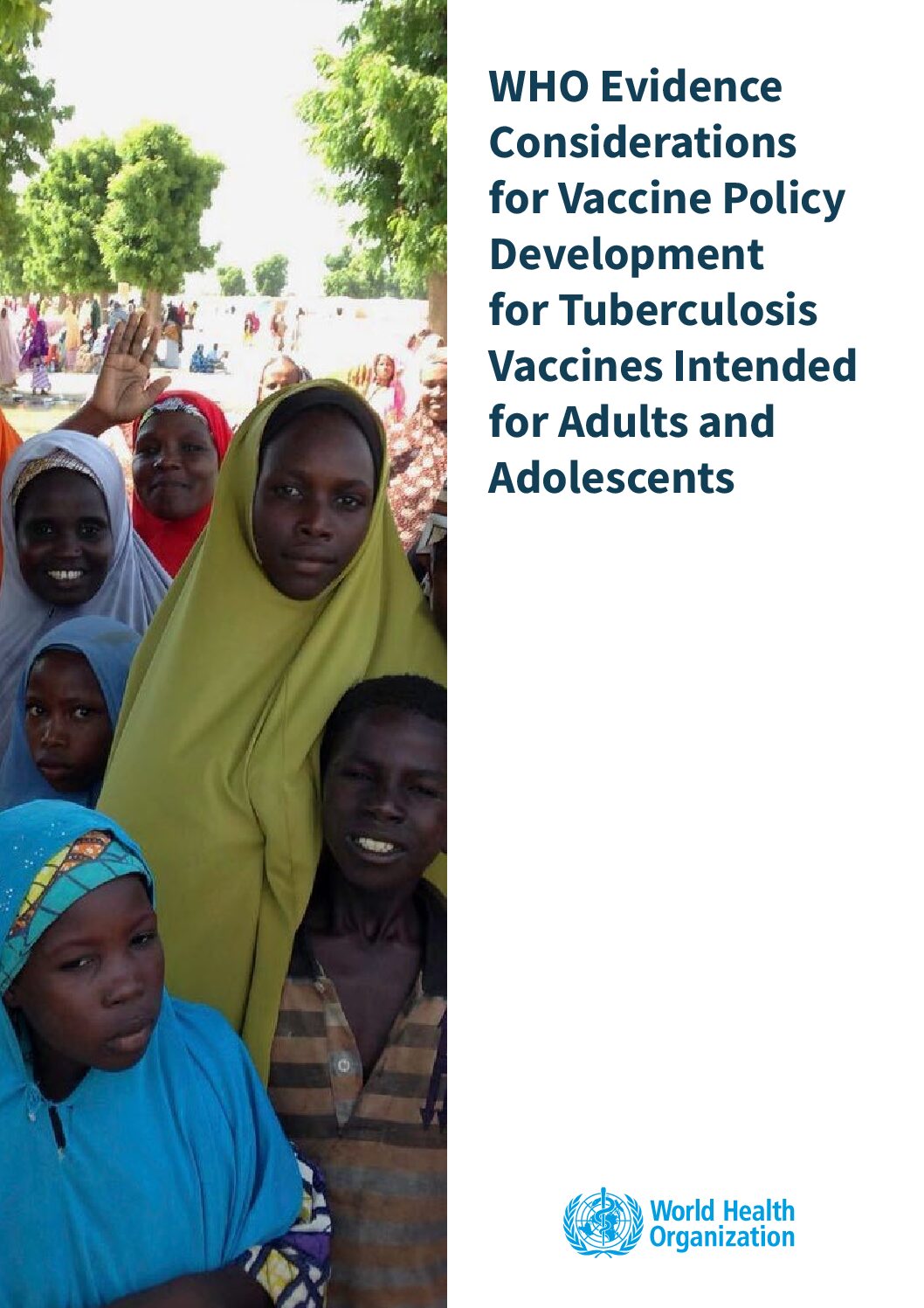
The World Health Organization’s Evidence Considerations for Vaccine Policy Development (ECVP) focuses on TB vaccines intended for adults and adolescents and is designed to support the product development, regulatory approval, introduction, access and widespread use in LMICs of new TB vaccines. The ECVP does not pre-empt policy or implementation decision-making but aims to reduce the risk of evidence gaps and consequent delays between vaccine regulatory approval and vaccine impact.
The 19th iteration of Treatment Action Group (TAG)’s Tuberculosis Research and Development Funding Report analyzes the state of play for dedicated TB R&D funding following the United Nations High Level Meeting on TB in September 2023.
Significant acceleration of investment — bolstered by broader democratic support from more diversified sources of funding — is necessary to develop and scale up the tools necessary to end TB as a public health crisis.
Treatment Action Group’s 2026 Tuberculosis Vaccines Pipeline Report surveys major developments in the clinical development of new TB vaccines at this moment of scientific promise and political peril. The pipeline contains 14 candidates and covers vaccines that currently in Phase I, II, or III trials, For each candidate, TAG summarizes the known ongoing, recently completed, or planned clinical trials. Narrative descriptions throughout discuss the notable updates of key candidates that generated the most news over the past year either due to clinical trial results, delays, or the beginning of major new studies.
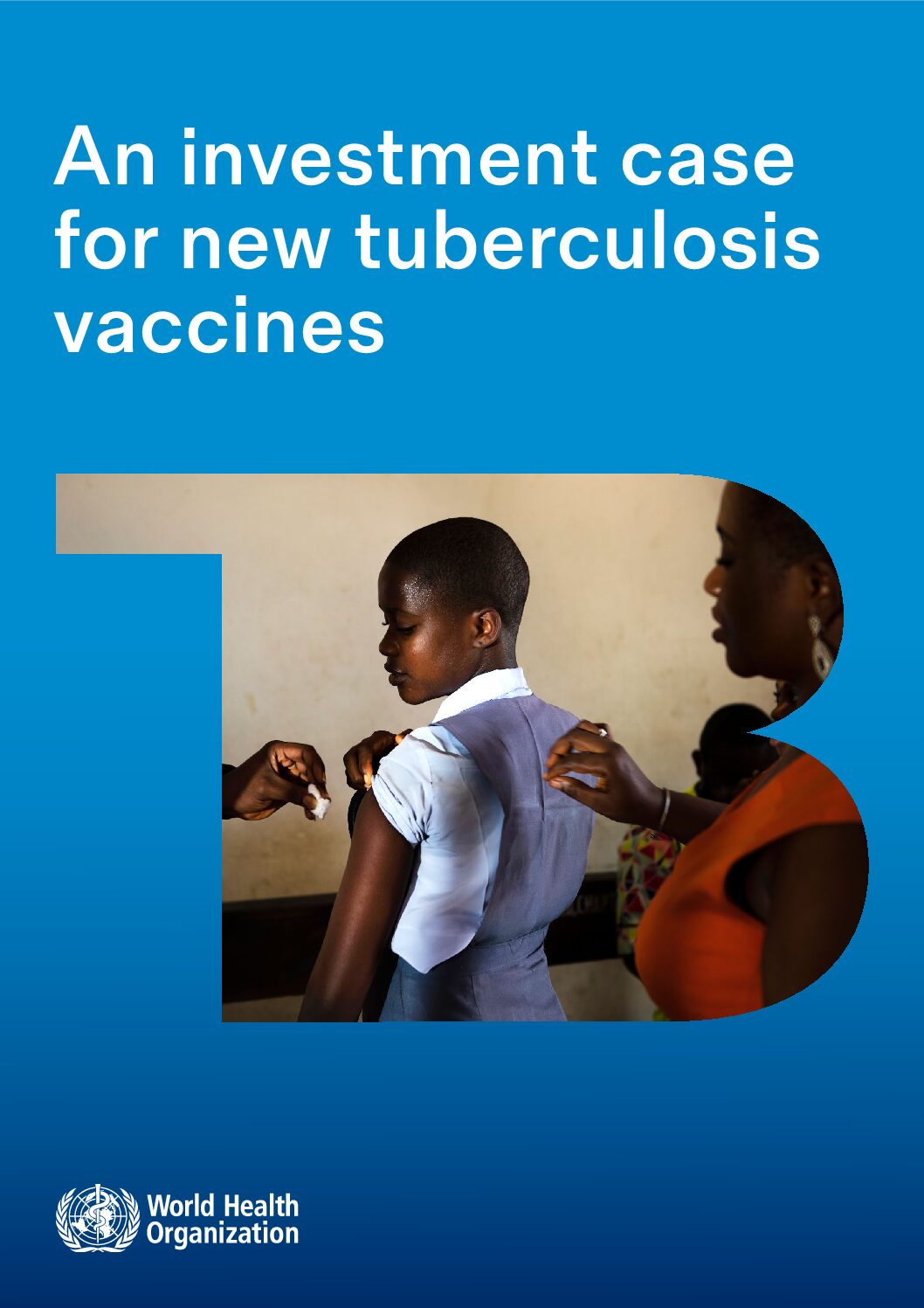
Early this decade, the WHO commissioned a study into the rationale for investing in new TB vaccines from the country perspective. This case study provides early evidence for policy and decision-makers to assess the grounds for investing in TB vaccines, vaccine research, financing, manufacturing, introduction, and procurement. Early and regular investments from key stakeholders supports the acceleration of the development of new, effective TB vaccines and their potential introduction.
The World Health Organization‘s Catalyzing solutions for equitable global access and sustainable financing for novel tuberculosis vaccines for adults and adolescents report assesses country readiness, demand and supply projections, product development pathways and the global financing landscape to understand potential uncertainties and bottlenecks affecting early introduction, including demand fragmentation, manufacturing capacity constraints, regulatory dependencies and financing gaps in potential TB vaccine introduction over the 2030–2040 period. The report also offers a set of solutions and mechanisms designed to proactively address these foreseen challenges.
Innovations in TB preventive treatment (TPT) and TB vaccines advancing through clinical trials may reach communities in the next five years, with the potential to redefine the approach to TB prevention around the world. This tool kit looks at existing and potential TPT and TB vaccines side by side to understand how they can work together in a potential future TB prevention portfolio.
Drawing on WHO guidelines, target product profiles, and clinical trial information, Clinton Health Access Initiative (CHAI) developed a toolkit to directly compare the current and potential future landscape of TB prevention resources to understand open questions all stakeholders need to be asking as they prepare for a new prevention landscape.
From Forest to Factory: Tracing the Supply Chains for Two Modern Adjuvants of Global Health Importance — QS-21 and MPL provides a first-of-its-kind analysis of the global supply chains of two key adjuvants used in several of the world’s most important vaccines. The report paints a detailed picture of QS-21 supply drawing on information from newly public data on QS-21. The report provides recommendations on how supply chains for adjuvants can be strengthened through greater transparency, competition, and sustainability with the goal of maximizing the global health impact of adjuvant development for equitable access to vaccines.
The WHO has identified the need for three unique types of TB vaccine that extend vaccine coverage to adults and adolescents, improve upon BCG in infants, and provide therapeutic coverage to improve treatment.
Despite the critical need for new vaccines to realize the end of TB, and the need to invest in research and development for new TB vaccines to meet these needs, there is little financial or commercial incentive to invest. Bridging the gap between need and investment requires cross-sectoral partnerships that focus on the entire lifespan of development from discovery to implementation.
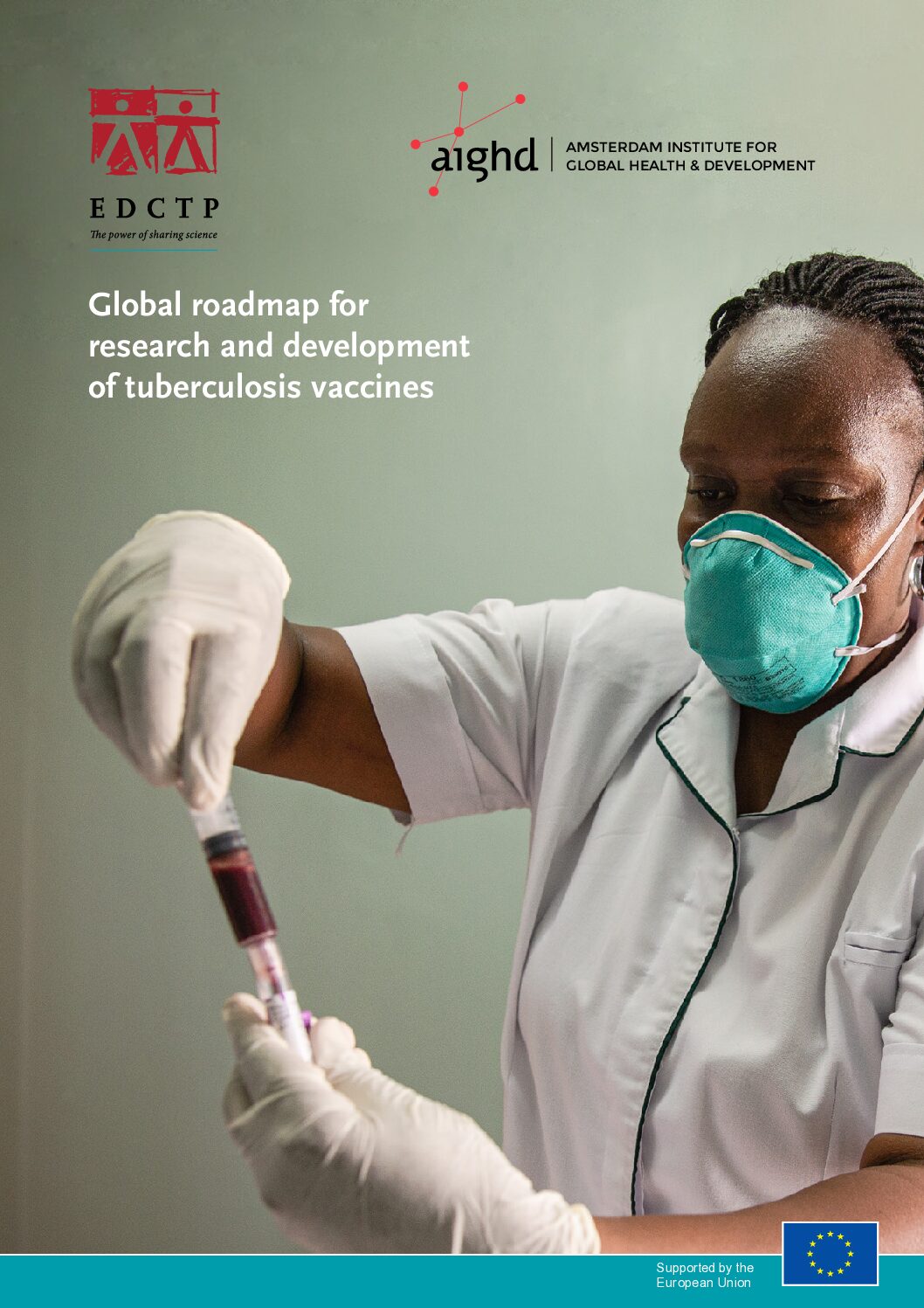
Through a global consultative process, EDCTP has developed this roadmap that identifies the key priorities and barriers to TB vaccine R&D and implementation and suggests pathways to overcome them including funding, transparent and open science, and robust stakeholder engagement.
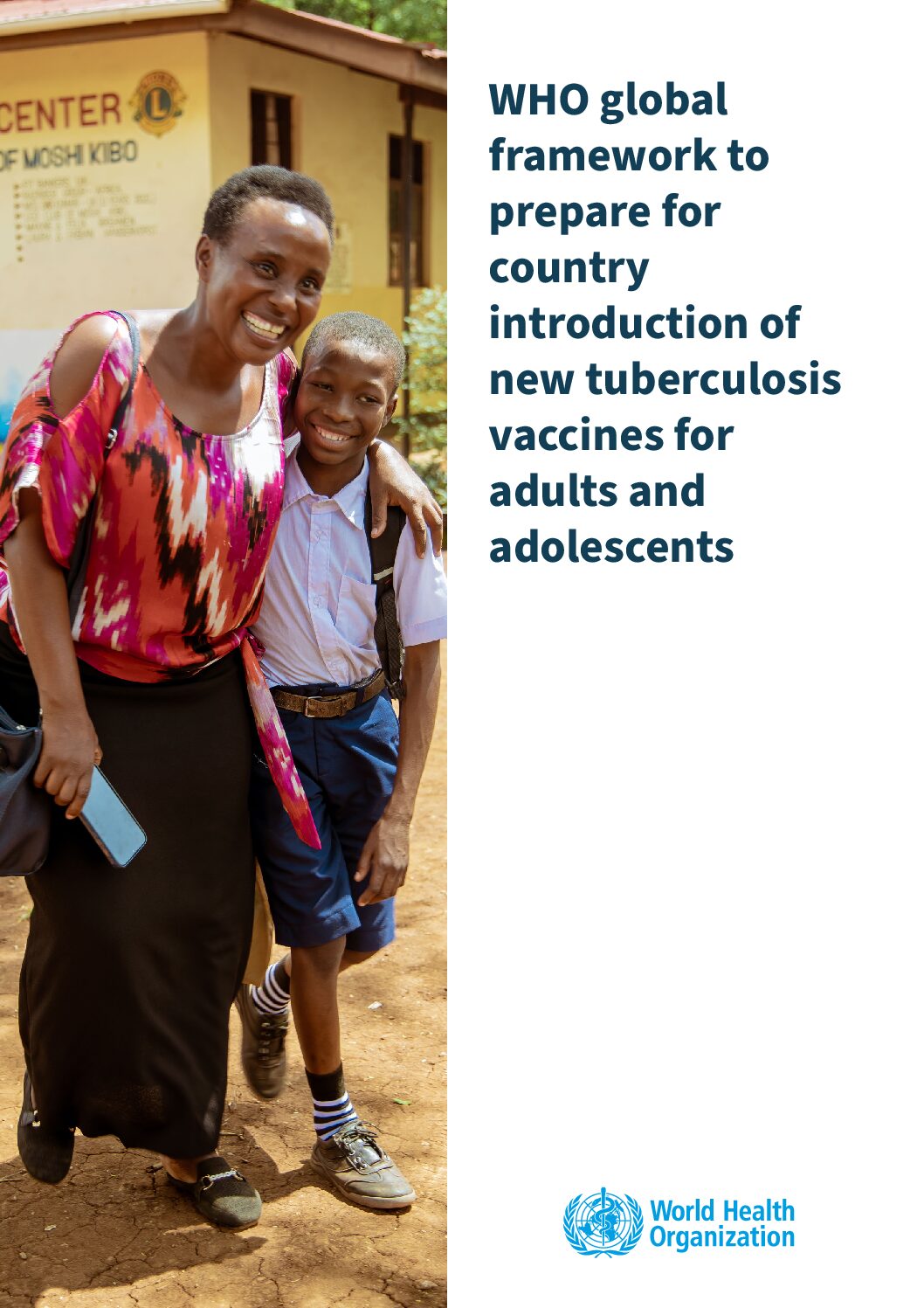
The WHO framework to prepare for Country Introduction of New TB Vaccines for Adults and Adolescents was designed to support the planning, investments, and preparation for the rapid introduction and scale-up of TB vaccines for adults and adolescents so that they are available such that new vaccines are manufactured with sufficient, sustainable and timely supply; accessible, with equitable delivery aimed at all who could benefit and accepted, so that end-users, healthcare workers, and policy makers´ requirements are met.
As now-late stage TB vaccine candidates were quietly advancing through the Pipeline, the World Health Organization brought together a group of scientists, developers, funders, civil society, and community representatives to discuss the ideal characteristics of a future TB vaccine. This document presents the preferred characteristics for new TB vaccines, informed by the high need for additional vaccines to meaningfully shift the battle to end TB.
The overarching priorities underscore the need for a vaccine to prevent pulmonary TB and reduce transmission of TB in adults and adolescents alongside a new pediatric vaccine that improves on the safety and efficacy of BCG.