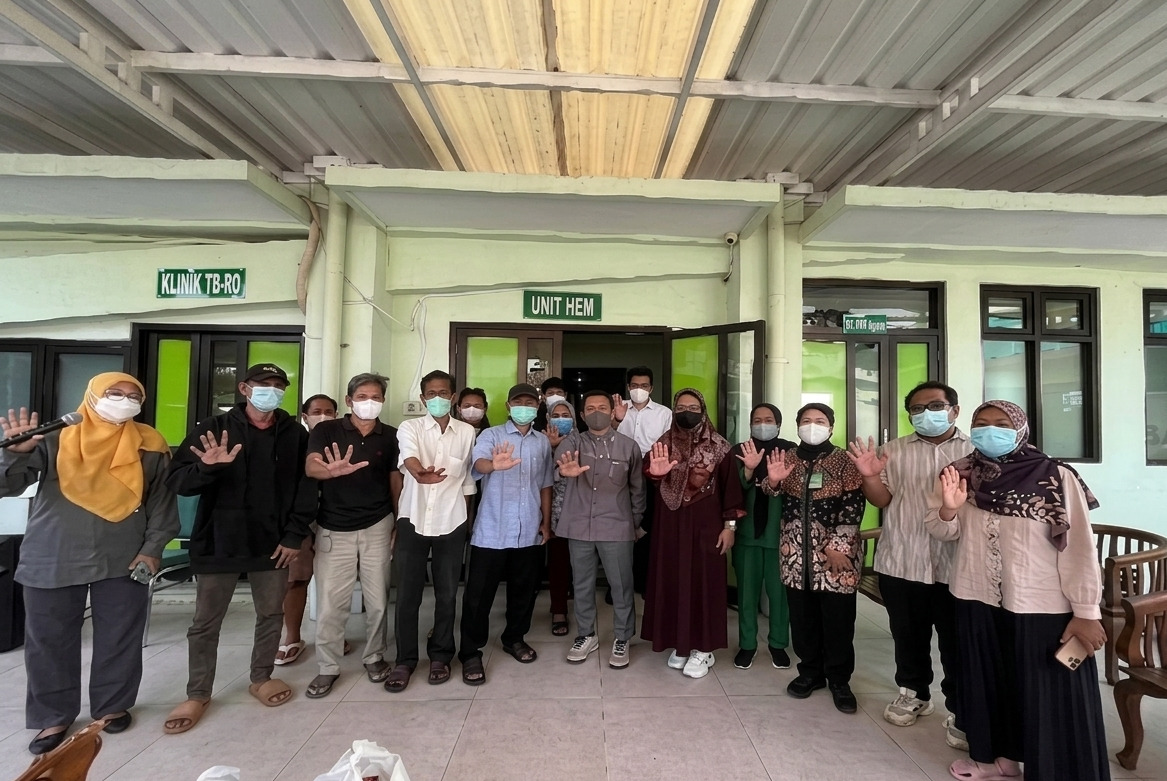
A group of clinicians and advocates in Yogyakarta stand outside a community health clinic specializing in drug-resistant tuberculosis
(DR-TB).
Written by: Yayasan Penyintas Tuberkulosis TERBESAR Yogyakarta (TERBESAR)
A 50-year-old woman from Sleman District, Yogyakarta Special Region, was diagnosed with drug-resistant tuberculosis (DR-TB) on March 30, 2024. She lives with five other family members, making a total of six people in one household. This densely populated living condition increases the risk of TB transmission if not properly managed.
The patient began treatment with the STR (Short Treatment Regimen) on April 2, 2024. Over nearly ten months of STR, she experienced a range of severe side effects, including nausea, vomiting, dizziness, muscle and joint pain, foot pain, and skin darkening. These side effects gradually diminished her motivation and hope for recovery.
Her emotional burden worsened as she saw her peers successfully complete STR treatment, while her own condition showed no improvement. She began to feel that her efforts were in vain and started losing hope.
The turning point came in early March 2025, when her 7th and 8th month culture results remained positive and it was determined that her treatment had failed. She was declared to have failed treatment. Initially, she was considered for the Longer Treatment Regimen (LTR), but after Drug Susceptibility Testing (DST) confirmed that the TB bacteria was still sensitive to fluoroquinolones (moxifloxacin), the clinical team decided to switch her to the BPaL/M regimen.
She began the BPaL/M treatment later that month. This change brought significant improvements to her physical, psychological, and social condition. The side effects were much milder, her appetite improved, and she began to gain weight. Most importantly, her confidence and motivation to recover returned. She shared that she was able to resume her daily activities more productively.
Nutritional support also played a vital role in her recovery. During nearly one year of STR treatment, her weight remained stagnant at around 40–41 kg. However, after four months of support from TERBESAR, her weight increased to 44 kg, marking a significant improvement in her nutritional status and overall well-being.
Support from the TERBESAR Foundation played a critical role in her journey. Regular home visits, emotional support, TB knowledge and education provided during this visits, and logistical assistance—such as medication pickup and nutritional support—helped ensure treatment adherence. The stigma and discrimination she had previously experienced also began to lessen, thanks to ongoing community education and engagement.
Her recovery story is a direct result of strong advocacy and peer support carried out by the TERBESAR Jogja Foundation, in close collaboration with the District Government through the District Health Office. Through this joint effort, access to newer treatment regimens like BPaL/M became more available and well-coordinated—from clinical decision-making and referrals to the implementation of treatment.
She shared that without the support from TERBESAR and the healthcare workers in Sleman, she likely would not have had the strength to undergo multiple changes in treatment regimens. The collaboration between community and government became the foundation for successful patient support—serving as a powerful example of how community-based advocacy can promote comprehensive recovery, not just clinically, but also psychologically and socially.
This case study is from a community project supported by the Unitaid-funded ASCENT DR-TB project.