
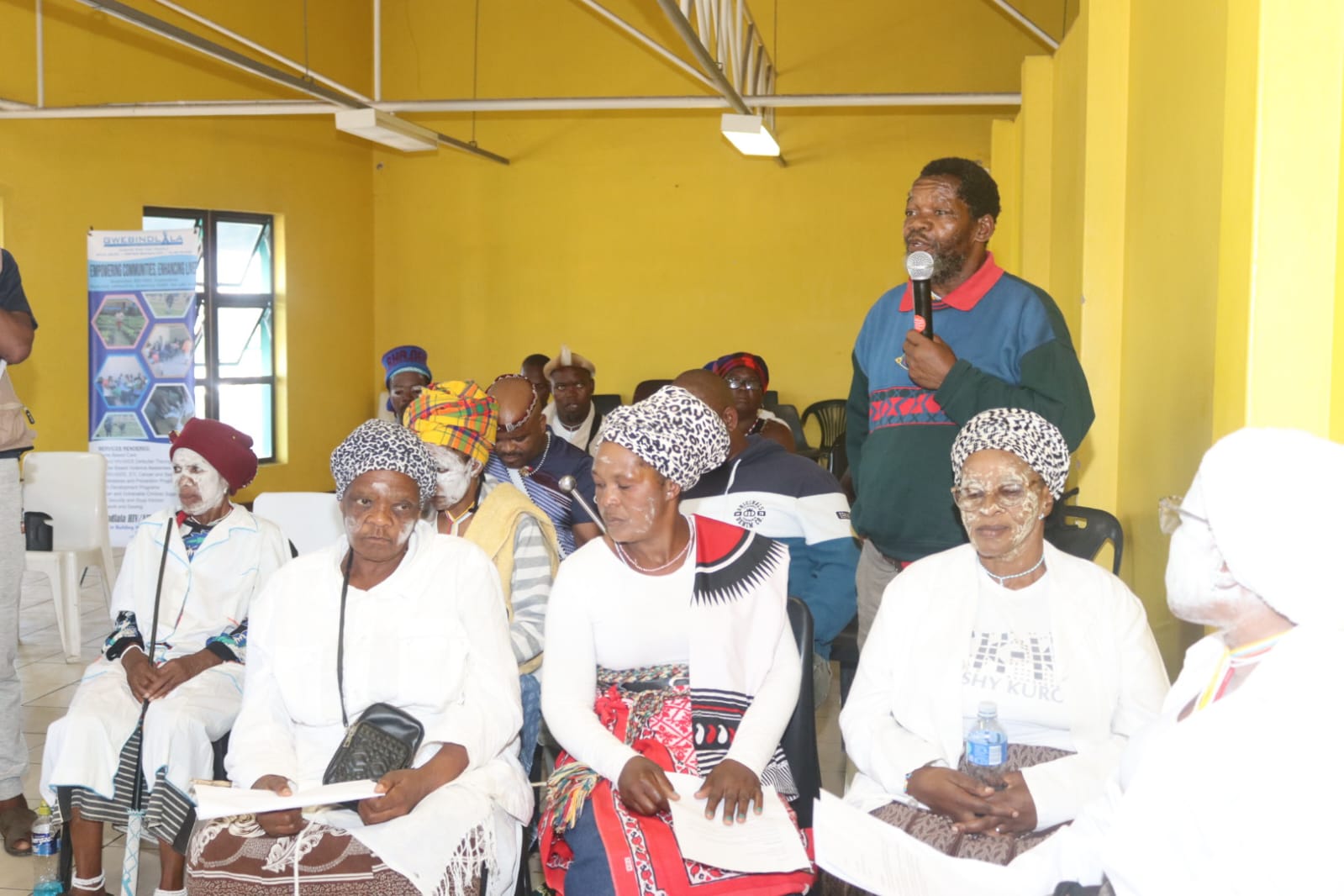
Traditional healers participate in a Gwebindlala HIV/AIDS Organization workshop in Eastern Cape, South Africa.
Written by: Gwebindlala HIV/AIDS Organization
Background: In many rural and peri-urban communities of the Eastern Cape, traditional healers are often the first point of contact for those experiencing symptoms of TB. However, long-standing mistrust between biomedical and traditional systems, combined with misinformation, meant that traditional healers were unintentionally discouraging patients from seeking formal TB care — particularly the new shorter, safer BPaL/M regimen.
Description of Activities Carried Out: In early 2025, as part of our ASCENT DR-TB project, Gwebindlala piloted a community-based dialogue and training initiative specifically focused on 12 traditional healers in the Mdantsane and Duncan Village areas. The approach was twofold:
- Bridge-building workshops were co-facilitated with local clinic nurses and former DR-TB patients who had completed the BPaL/M regimen. This fostered trust and allowed traditional healers to hear personal experiences with the treatment.
- Ongoing mentorship and material support, including culturally relevant IEC materials in isiXhosa, enabled healers to confidently communicate accurate treatment information in their daily practice.
Following the initial engagement, traditional healers became vocal champions of the new regimen, referring patients, co-hosting TB awareness sessions, and actively engaging in stakeholder meetings.
Results: Within two months, Gwebindlala observed a 43% increase in referrals to DR-TB testing sites from communities linked to the trained healers. One healer, “Mama N”, who had previously been skeptical of “Western medication,” now serves as a local ambassador and appeared on a community radio program to promote early testing and adherence. Clinics in NU9 and Reeston reported increased walk-ins from patients who referenced their healer as the source of referral. This shift represented more than an outcome — it was a cultural turning point, proving that community-led advocacy rooted in trust can overcome deep-seated resistance.
Lessons Learned & Next Steps:
- Trust is a precursor to impact. The success of this initiative lay in our commitment to mutual respect between traditional and formal health systems. By treating healers not as barriers but as partners, we activated an influential grassroots advocacy network.
- Culturally relevant communication is key. Visuals, storytelling, and language accessibility were essential to building shared understanding.
- Sustainability must be prioritized. Many healers now request refresher sessions and ask to be involved in broader community health initiatives. However, without continued funding and coordination with local health authorities, this momentum risks stalling.
Gwebindlala plans to formalize this healer engagement model into a replicable framework for other rural zones, and has submitted a concept note to local government structures requesting integration into TB demand creation strategies.
This case study is from a community project supported by the Unitaid-funded ASCENT DR-TB project.