Skip to content

At This Week’s UN General Assembly High-Level Meeting on Tuberculosis, the 1/4/6×24 Campaign Calls on Political Leaders to Take Urgent Action for Equitable Access to Shorter, Safer TB Regimens

  • Jason Kirk

Ahead of the United Nations General Assembly High-Level Meeting on the Fight Against Tuberculosis, the 1/4/6x24 Campaign is sounding the alarm that the political declaration commits neither the funding nor the actions needed to expand access to the best-available TB regimens and diagnostics.

Read more

HCV Elimination Among People Living with and at Risk of HIV: Challenges and Opportunities

  • Jason Kirk

Following the White House’s recent proposal for a National Hepatitis C Elimination Plan as part of its Fiscal Year 2024 budget request to Congress, and the fact that key populations for HIV are also at high risk of HCV, Treatment Action Group is organizing a webinar that will highlight best practices and challenges for HCV elimination with a specific focus on high-burden populations.

Read more

The ABC for a TB Activist: 1/4/6×24 Campaign and Supportive Diagnostics

  • Jason Kirk

On 15 June, 2023, TB Europe Coalition (TBEC) organized a webinar featuring a presentation by Treatment Action Group’s TB Project Officer, David Branigan, on the practical actions advocates can take to promote the adoption and scale up of shorter, safer 1/4/6 regimens for TB prevention and the treatment of drug-sensitive and drug-resistant TB as well as supportive diagnostics.

Read more

SMART4TB CONSORTIUM ANNOUNCES COMMUNITY PARTNERS

  • Jason Kirk

Supporting, Mobilizing, and Accelerating Research for Tuberculosis Elimination (SMART4TB) is a five-year cooperative agreement made possible by the United States Agency for International Development (USAID), with the assistance of the American people, that aims to transform tuberculosis (TB) prevention and care.

Read more

Why Hepatitis C Virus Care Remains Inaccessible

  • Jason Kirk

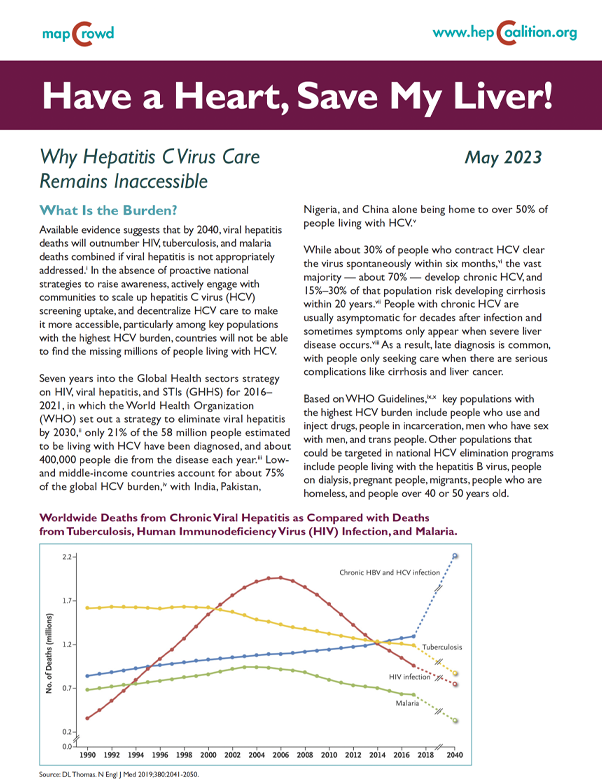
This policy brief explores barriers such as the high-burden among marginalized communities, the complicated diagnostic process, and the difficulties of finding the missing millions of people with HCV in most high-burden countries.

Read more
Back To Top