Download:
Activists Guide Diagnostic Tools 2026
By Tejaswini Dharmapuri Vachaspathi
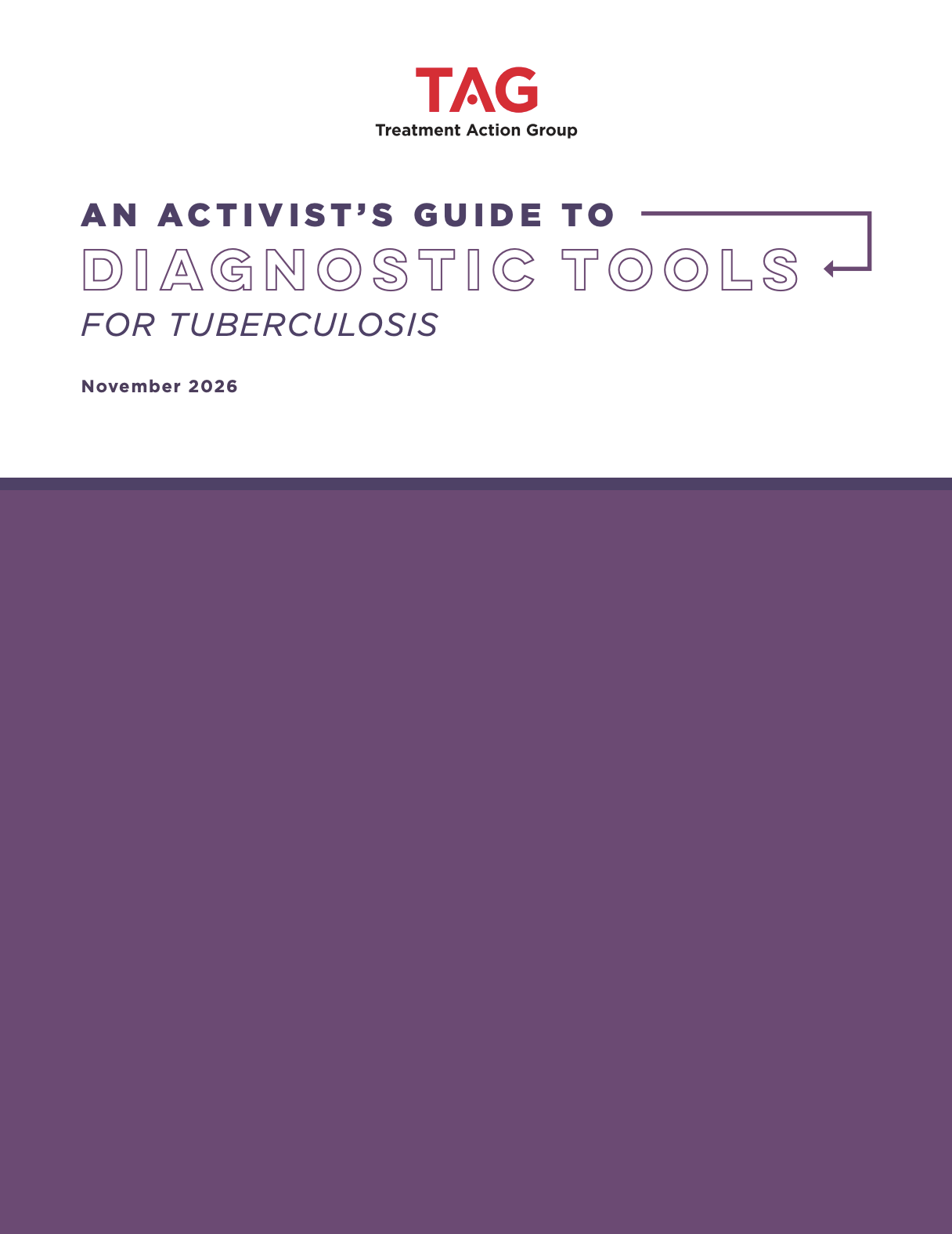
The World Health Organization (WHO) continues to update its recommendation on diagnosing and screening for tuberculosis (TB), reflecting the pace of innovation in TB science. An Activist’s Guide to Tuberculosis Diagnostic Tools 2026 captures the latest testing strategies and tools, with supporting information on how they can be optimized in country programs, flagging key access considerations, and steps activists can take to fight for equitable access to new, better TB diagnostic tools.
The 2026 update builds on past versions developed in 2020 and 2025. Critical changes from this year include the recommendation of a new class of near-point-of-care nucleic acid amplification tests (NPOC-NAATs), including the first-in-class PlusLife MiniDock MTB Test. NPOC-NAATs can be placed at community and primary health care settings, provide results in less than an hour and can be performed by health workers with basic technical skills. Other updates cover recommendations for the use of tongue swabs for TB detection among adults and adolescents who struggle to produce sputum, and sputum pooling as a strategy to make molecular testing more affordable when resources are constrained. The guide also updates recommendations for concurrent testing using multiple sample types to improve TB detection among children and people living with HIV.
While new tools are necessary, they are not sufficient on their own. They must be matched with:
- Evidence of how well tests work across all populations who could benefit, so no one is left behind.
- Healthy market competition that gives countries affordable options and allows them to choose tests that best meet their needs.
- Community-led monitoring to identify barriers to access and assess how tests and testing strategies perform in real-world settings.
- Ambitious targets and national commitments to expand access to these tests and linkage to care.
- Concrete action and accountability to turn those commitments into measurable progress in closing the TB diagnostic gap.
To ensure scientific progress is matched by ambitious scale up and access plans, the guide aims to equip activists with the knowledge they need to advocate to close deadly diagnostic gaps and link people to TB care. By outlining how to hold governments, donors, and industry partners accountable, the guide is a pathway to fight for the best available tests to be made affordable and available in the right places.