
Download:
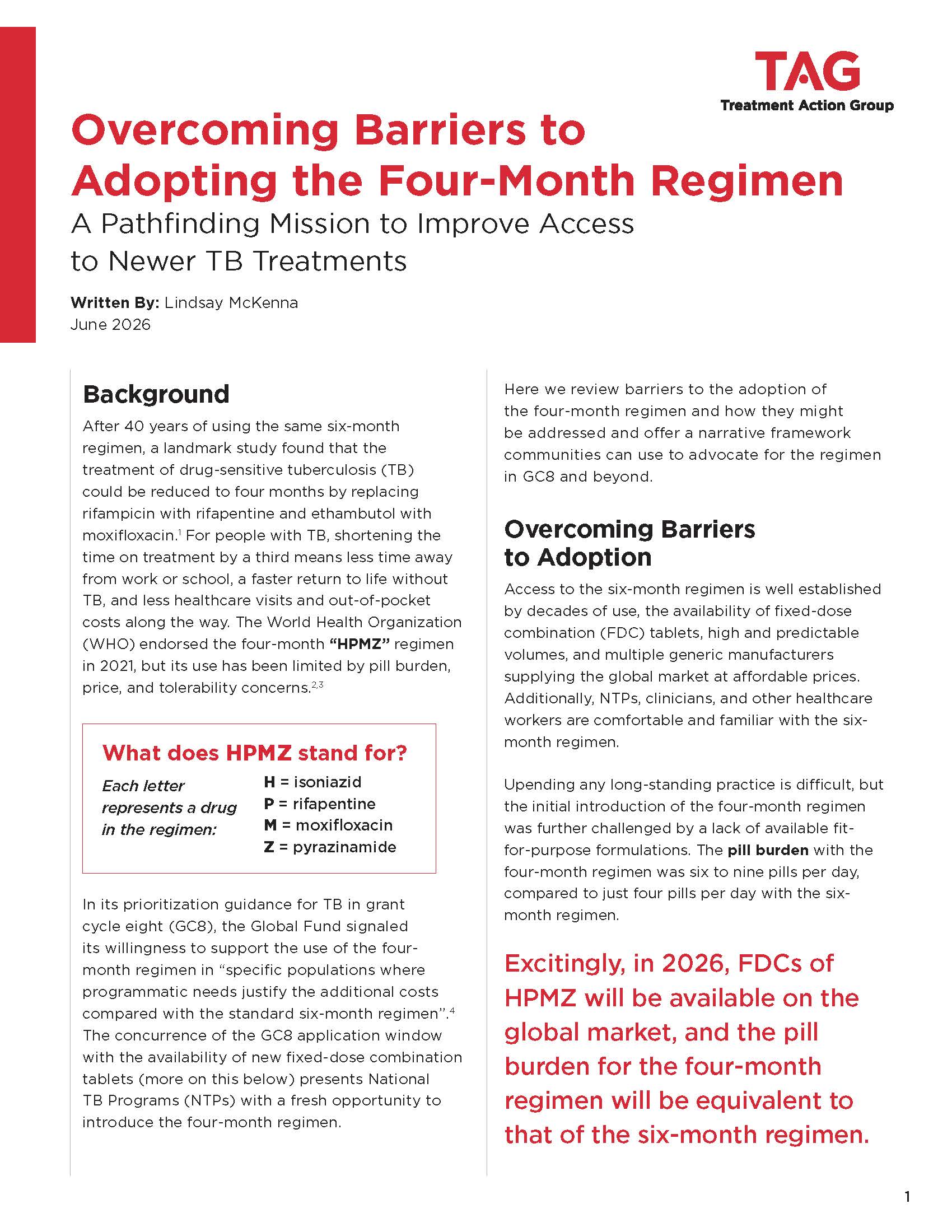
Drug-sensitive tuberculosis (TB) treatment can be shortened from six to four months by replacing rifampicin with rifapentine and ethambutol with moxifloxacin. For people with TB, shortening the time on treatment by a third means less time away from work or school, a faster return to life without TB, and fewer healthcare visits and lower out-of-pocket costs along the way. The World Health Organization (WHO) endorsed the four-month “HPMZ” (isoniazid, rifapentine, moxifloxacin, pyrazinamide) regimen in 2021, but its use remains limited.
In this advocacy brief we review barriers to the adoption of the four-month regimen and how they might be addressed, and offer a narrative framework communities can use to advocate for the regimen in Global Fund Grant Cycle 8 and beyond.